
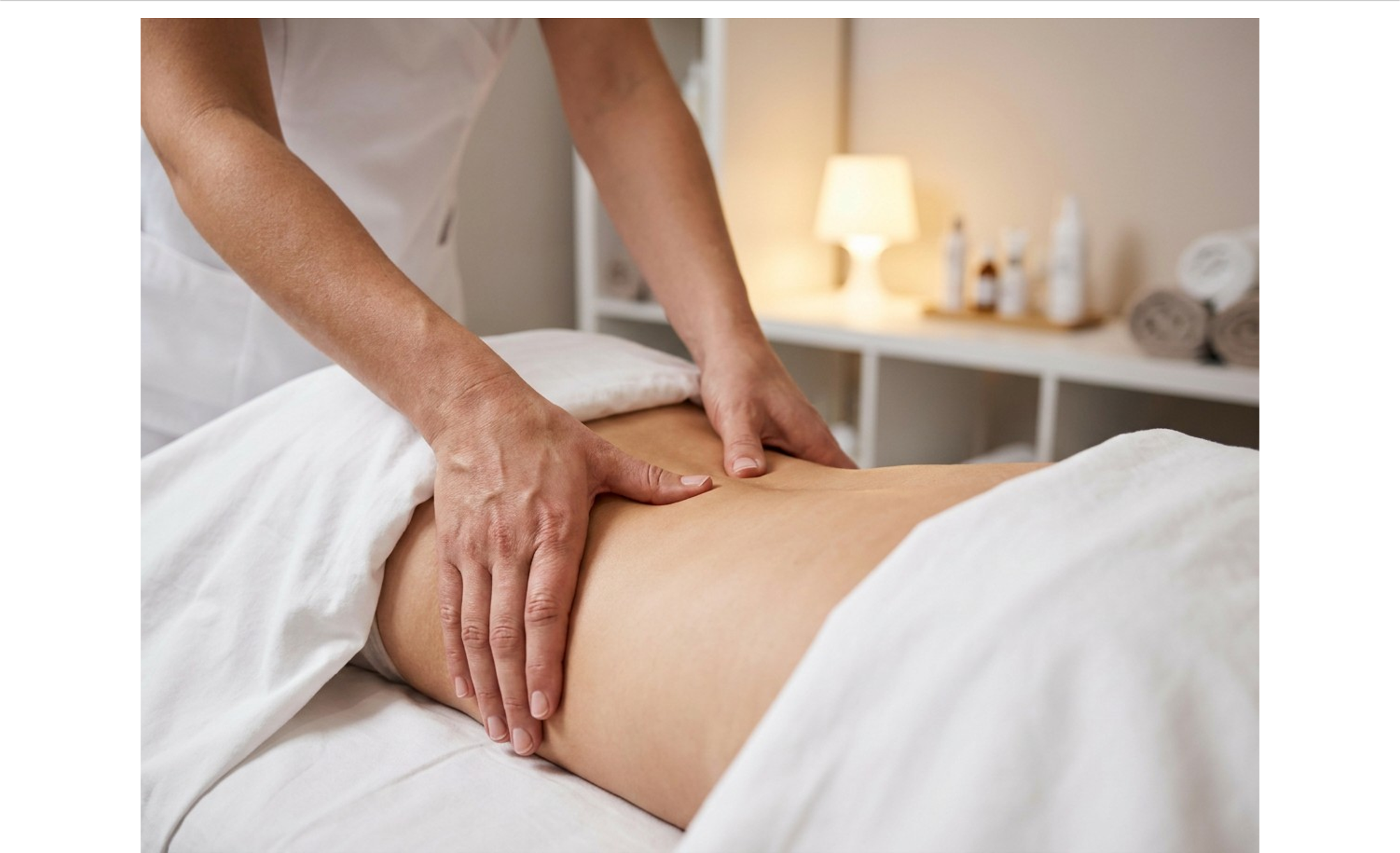
Deep Tissue Massage in Sarasota: Who It's For and What It Actually Helps With
At some point, you've probably been on a massage table and thought: this would help more if they just pressed harder. You're not wrong that pressure matters. But pressing harder is not what deep tissue massage actually is — and that misunderstanding costs people the results they're looking for.
Deep tissue massage is a specific clinical modality with a defined set of techniques, a clear physiological mechanism, and a well-established category of conditions it resolves effectively. At ActiveBody Functional Therapy in Sarasota, every session begins with an assessment, and the technique follows the finding.
What "Deep Tissue" Actually Means
Deep tissue massage refers specifically to techniques designed to affect the deeper layers of muscle, the surrounding fascia, and the connective tissue between and beneath the superficial musculature — structures that lighter effleurage and Swedish strokes cannot meaningfully reach.
When a therapist applies too much pressure too quickly, the body tightens in response. This is not a failure of willpower — it is a reflex. The nervous system perceives sudden deep pressure as a potential threat and contracts the surrounding musculature to protect the underlying tissue. A guarded muscle does not release. This is why aggressive pressure alone rarely produces the outcome people hope for.
Effective deep tissue technique uses pace, direction, angle, and tissue preparation to encourage the nervous system to permit the depth rather than resist it. A skilled therapist reaches the same structures a less-skilled one fights to access — with less discomfort and substantially better results.
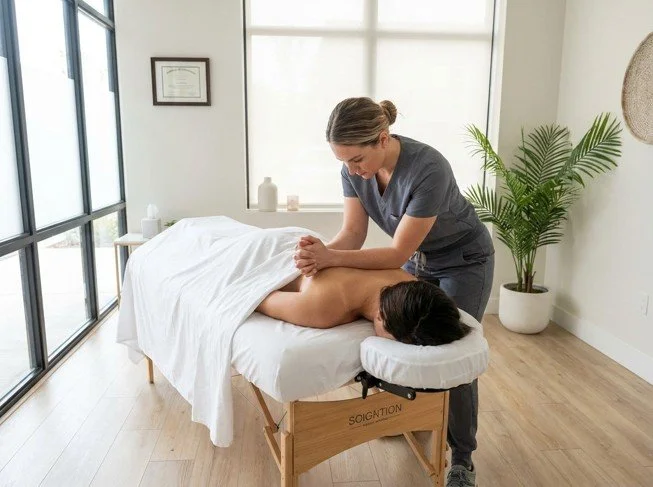
The Physiology: Why Deep Tissue Works
Fascial remodeling. Fascia is the connective tissue that envelops every structure in the body. Under chronic load or repetitive strain, fascia develops adhesions — points where adjacent layers bind together and lose the ability to glide. Sustained mechanical pressure physically disrupts cross-linked collagen bonds and allows the tissue to reorganize into a more functional structure that supports full, pain-free movement.
Nervous system modulation. Deep sustained pressure activates Ruffini mechanoreceptors in the fascia, producing a parasympathetic shift in the nervous system. The muscle releases not because it was pushed into submission, but because the nervous system received a signal that downregulated its protective holding tone. Research in the Journal of Bodywork and Movement Therapies consistently shows this produces greater and longer-lasting results than rapid or superficial techniques.
Circulatory enhancement. The deeper structures of the body — posterior chain musculature, hip rotators, adductors — are relatively poorly vascularized. Metabolic waste products accumulate readily in these tissues. Deep tissue techniques applied with directional intent toward lymphatic drainage pathways accelerate clearance and improve the cellular environment for repair.
Who Benefits Most From Deep Tissue Massage
Golfers with posterior chain restriction. The rotational demands of a golf swing concentrate load through the thoracic spine, lumbar erectors, hip rotators, and posterior shoulder. Deep tissue work targeting the thoracolumbar fascia, glutes, and posterior rotator cuff restores the mobility that translates into both comfort and swing mechanics.
Desk workers who train. Eight or more hours of spinal flexion — seated at a desk, behind a wheel, on a phone — tightens the cervical and thoracic erectors and anterior chest wall. Deep tissue work restores the movement options that get compressed during the workday, so you can actually perform in your evening workout.
Athletes managing repetitive strain. Runners accumulate fascial restriction in the IT band, TFL, and soleus. Cyclists develop shortened hip flexors and overloaded lumbar extensors. Swimmers develop anterior shoulder imbalances. Deep tissue work is how you address the accumulation before it becomes injury.
People recovering from injury or surgery. The body lays down scar tissue in a disorganized pattern during healing. Left unaddressed, it restricts mobility and alters how force moves through surrounding tissue. Deep tissue work, applied when healing is sufficiently advanced, remodels those adhesions and restores functional mobility.
What to Expect at ActiveBody in Sarasota
Your first session begins with a conversation — not paperwork. Where is the issue? When did it start? What aggravates or relieves it? Russell will then observe a few movements: how your thoracic spine extends, whether your shoulder blades move symmetrically, how your hips load in single-leg stance. These movement signatures reveal which structures are restricting and which are compensating.
Pressure will be firm and targeted. It will not be comfortable in the way a relaxation massage is comfortable, but it should never produce sharp, shooting, or radiating pain. A building, aching pressure that eventually releases is the target sensation. Mild soreness over the following 24–48 hours is normal and productive. Hydration and light movement support the recovery.
Frequently Asked Questions
Is deep tissue massage supposed to hurt?
Therapeutic discomfort and harmful pain are different things. Working through a dense adhesion will produce an intense aching sensation — uncomfortable but manageable. Sharp, shooting, or radiating pain is a signal to communicate with your therapist immediately. Russell works progressively and adjusts in real time.
How is deep tissue different from sports massage?
Deep tissue refers primarily to the techniques and depth used. Sports massage refers more broadly to massage applied in the context of athletic performance and recovery. At ActiveBody, both labels describe work that is clinically informed, assessment-driven, and aimed at a functional outcome.
How many sessions will I need?
A recent acute strain may respond in one to two sessions. Chronic tension patterns or post-surgical scar tissue typically require three to six sessions, spaced one to two weeks apart. Many active Sarasota adults continue with monthly maintenance sessions to prevent re-accumulation before it becomes symptomatic.
Can deep tissue make things worse?
When applied appropriately, no. When applied without regard for the nervous system's readiness — too much too fast — it can produce excessive post-session soreness. That is the difference between technique and aggression, and why the session involves an ongoing conversation, not a unilateral application of force.
Book Your Deep Tissue Session in Sarasota
Carrying months of accumulated tension? One well-applied session can change how your body feels and moves. Let's find out what's holding you back.
5500 Bee Ridge Road, Suite 102 | Sarasota, FL 34233
Call or text: 941-479-8849